

What are you looking for?

Newsroom

News from the Centre

Two petri dishes containing myxobacteria are held aloft, one in each hand
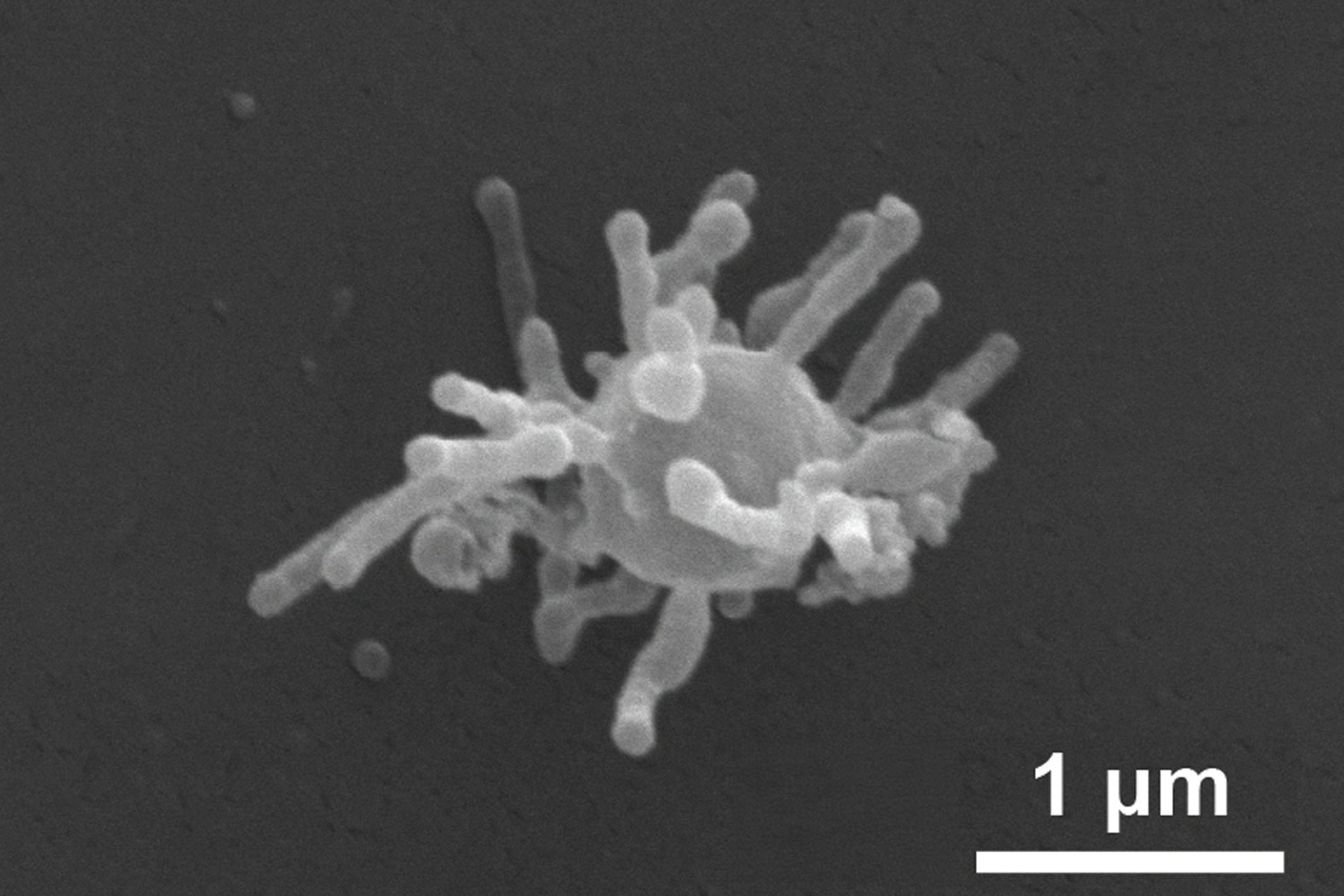
Most antibiotics used clinically are based on natural compounds produced by bacteria and other microorganisms. At the Helmholtz Institute for Pharmaceutical Research Saarland (HIPS), researchers are using soil-dwelling myxobacteria as a source of new active ingredients. They are able to discover new active compounds primarily in bacteria that have not yet been extensively studied. Through decades of work, a HIPS research team has significantly expanded the biological diversity of myxobacteria. They are now making these microorganisms and their genetic data available to the entire research community, as they provide the basis for the discovery of new bioactive compounds. The researchers published their findings in the journal Advanced Science.
12.08.2026
podcast Thumbnail
At first glance, mucus sounds more unpleasant than essential. In fact, it forms an important protective layer on our mucous membranes: It transports dirt, bacteria, and viruses out of the body and makes it difficult for pathogens to penetrate our cells in the first place. Prof. Christian Sieben, head of the research group “Nano Infection Biology” at the Helmholtz Centre for Infection Research (HZI), is studying this crucial moment in an infection in great detail. Using state-of-the-art microscopy, he observes individual virus particles and investigates how they interact with our cells. In this episode of InFact, he explains how respiratory viruses overcome our natural barriers and why influenza viruses in particular have significant pandemic potential.
23.07.2026
 A view inside a laboratory; two hands wearing blue gloves working with a pipette
Bacteria have spent decades evolving resistance to virtually every antibiotic we have thrown at them. To stay ahead, new drugs must hit targets that existing antibiotics have never touched. A research team at the Helmholtz Institute for Pharmaceutical Research Saarland (HIPS) has now developed a series of synthetic drug candidates that do exactly that: By blocking an essential molecular supply system, these molecules cut off the bacteria's essential vitamins supply and starve them to death. The team published its findings in two studies back to back in the Journal of Medicinal Chemistry.
21.07.2026
Facts & Figures
Employees
0 +
Employees
Basic funding in 2025 (plus third-party funding)
0 Mio.
Basic funding in 2025 (plus third-party funding)
Publications in 2025
0
Publications in 2025
One center - six locations

The HZI locations at a glance

The Sites of the Helmholtz Centre for Infection Research are distributed all over Germany. In addition to the main campus in Braunschweig, there are facilities in five other cities: Hamburg, Hanover, Saarbrücken, Würzburg and Greifswald.

Please note: Once you watch the map, data will be transmitted to Openstreetmap. For more information, see Openstreetmap Privacy.

One center - six locations

The HZI locations at a glance

The Sites of the Helmholtz Centre for Infection Research are distributed all over Germany. In addition to the main campus in Braunschweig, there are facilities in five other cities: Hamburg, Hanover, Saarbrücken, Würzburg and Greifswald.

Saarbrücken
Würzburg
Greifswald
Hamburg

Events

Public
07
May
2026
11.00 am | HZI wide
Wissenschaftskommunikation
Host: HIPS
Scientific
23
August
2026
4.00 pm | Hannover
Scientific
03
September
2026
8.00 am | Hannover
Symposium
Host: TWINCORE
Scientific
24
September
2026
9.00 am | Braunschweig
Forum
Host: HZI Campus
Show all events

Publication database

Publication overview

The publication database contains over 10,000 publications by HZI employees.

To publication database